Current Exhibitions

Work of the Week showcases Harry Kiyooka

Sticky at top of newsfeed
Yes
Article teaser

The AFA has loaned 8 artworks to be included in The Nickle Galleries exhibition of Harry Kiyooka, curated by Mary-Beth Laviolette.

Body

This week’s Work of the Week spotlights the exhibition HARRY MITSUO KIYOOKA – Artist. Educator. Activist., on now at the Nickle Galleries in Calgary. 

A 70-year retrospective of abstract art, portraiture and early abstract landscapes!
 

The AFA has loaned eight artworks to the gallery for inclusion in the exhibition. The exhibition is curated by Mary-Beth Laviolette and runs until April 27, 2024.

Learn more about the exhibition: nickle.ucalgary.ca/exhibition/harry-mitsuo-kiyooka/

Facebook title
Work of the Week showcases Harry Kiyooka
Facebook description

The AFA has loaned 8 artworks to be included in The Nickle Galleries exhibition of Harry Kiyooka, curated by Mary-Beth Laviolette.

Twitter title
Work of the Week showcases Harry Kiyooka
Twitter description

The AFA has loaned 8 artworks to be included in The Nickle Galleries exhibition of Harry Kiyooka, curated by Mary-Beth Laviolette.

Button text
Harry Kiyooka art
Deadline
Art discipline
Location
Collections Database Image
Image
Title
Red Contiguous
Year
1972
Medium
acrylic on canvas
Collections Images Slideshow
Harry Kiyooka
H K Self Portrait
2019
oil on board
Harry Kiyooka
High Yellow
n.d.
silkscreen on paper
Harry Kiyooka
Red Contiguous
1972
acrylic on canvas
Tuscania
c.1962-1966
oil on canvas

Prairie Interlace: Weaving, Modernisms and the Expanded Frame

Sticky at top of newsfeed
No
Article teaser

Our Work of the Week features selected images loaned to for this touring exhibition travelling from Alberta to Manitoba and Saskatchewan.

Body

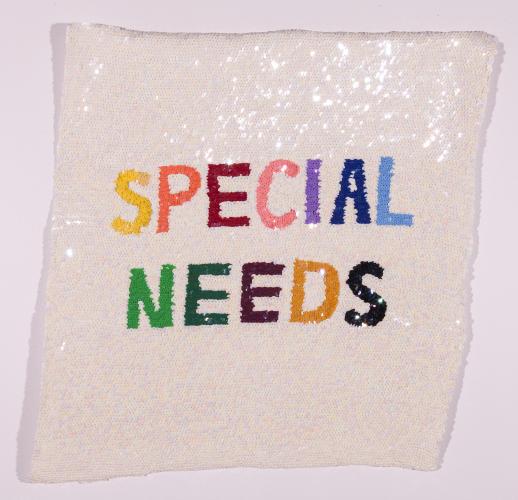
Prairie Interlace: Weaving, Modernisms and the Expanded Frame examines the explosion of textile art from the Canadian Prairies during the last century.
 

This touring exhibition featured sixty artworks by forty-eight artists. The AFA was pleased to loan nine artworks through our exhibition loans program, four of which can be viewed above. 

  • this exhibition was hosted by Nickle Galleries in Calgary, from September 9 to December 17, 2022.

The exhibition toured across the prairies until February 2024.

For more information about the artists and artworks included in this exhibition, visit prairieinterlace.ca

Facebook title
Prairie Interlace: Weaving, Modernisms and the Expanded Frame
Facebook description

Our Work of the Week features selected images loaned to for this touring exhibition travelling from Alberta to Manitoba and Saskatchewan.

Twitter title
Prairie Interlace: Weaving, Modernisms and the Exp
Twitter description

Our Work of the Week features selected images loaned to for this touring exhibition travelling from Alberta to Manitoba and Saskatchewan.

Art discipline
Collections Database Image
Collections Images Slideshow
Eva Heller
Heat
1983
wool, cotton tapestry on cotton board
Cindy Baker
I KNOW PEOPLE ARE STEALING MY THINGS RUG
1998
atch-hook, acrylic yarn, wool yarn, cotton canvas backing on canvas
Amy Loewan
A MANDALA "THE CIRCLE AND THE SQUARE"
1996
rice paper weave, Chinese ink, charcoal, printout on paper
Hazel Gladys Evelyn Schwass
UNTITLED
1974
wool, sheep fleece tapestry, wool, bones, wooden beads

DataLog : Art Encoded - An Emerging Curator Exhibition

Sticky at top of newsfeed
No
Article teaser

DataLog : Art Encoded fully embraces and uses the resources of the digital realm to exhibit selected artworks from the AFA Collection

Body

DataLog: Art Encoded is curated by Jane Edmundson, and generously funded through the Alberta Foundation for the Arts Emerging Curator Fellowship. Click through the images in the exhibition above, then scroll down to learn more about the pieces.
 

Explore this exhibition on Google Arts & Culture.
 

The medium is the message.”

-Marshall McLuhan, Understanding Media: The Extensions of Man, 1964

Our online experiences are mediated by streams of code that most of us never see. This invisible data facilitates all of our technological interactions and enables work, entertainment, education, and creation. The off/on, negative/positive Boolean patterning of binary computing code is a contemporary cousin to the printing press, Pierre Jaquet-Droz’s 18th century automatons, and the Jacquard Loom. The relationship between technology and creative production is visible today in Photoshop hobbyists,Maker Faires, and the coded meanings of conceptual art.

The ability to instantly access a wide variety of information and platforms for an enriched, interactive experience is one not easily achieved by an exhibition in a conventional, physical art gallery space. DataLog : Art Encoded fully embraces and uses the resources of the digital realm to exhibit selected artworks from the AFA Collection while discussing the existence of art inside the technological landscape. The selected artworks employ patterning, code, negative/positive space, layering and pixelation to deliver messages to the viewer that are further influenced by the online platform that gives us access to them. The interdependent relationship between information and the technologies that facilitate its spread was predicted by Marshall McLuhan in pre-internet 1964, when he argued that the structure of a medium influences the way the messages it delivers are perceived. McLuhan believed that the information we receive is altered by the type of platform that delivers it to us; that knowledge consumed via book, radio, television, or computer, will be remembered and used differently.

DataLog : Art Encoded is organized into three thematic sections – ‘01100001 01110010 01110100’, ‘[re]generation of the image’, and ‘The Work of Art in the Age of Digital Reproduction’ – that explore concepts applicable to the worlds of both art and technology, including coded meaning, absence/presence, Pointillism, obsolescence and the evolution of visual media. Walter Benjamin’s influential 1935 essay “The Work of Art in the Age of Mechanical Reproduction” is re-examined within the context of digital creative methods and held up as a mirror to current discussions around artistic authenticity in a technologically-mediated age. Hyperlinks to related articles, YouTube videos, artist websites, interactive portals and streaming apps situate the selected artworks within the diversified multimedia of contemporary life, where our browsers (and brains) regularly have countless tabs open simultaneously.

Artwork Descriptions

01100001 01110010 01110100

Jane Molnar, Hoola Hoopers, 1979, photo-engraving on paper, 1981.068.001
Molnar’s repeating clusters of figures holding hula hoops are reduced to the bare contrasts of greyscale in this optical-illusory print. The white spaces of arms, legs, and hoops blend together against the black and grey shadows as the figures become exponentially tinier, disappearing into the perspectival plane of the image. As the viewer’s eye travels into the image’s depth, the figures give way to abstraction, creating a pattern of positive and negative space.

Marion Nicoll, The Audience, 1973, ink on paper, 1981.155.218
Nicoll is most known for her hard-edge abstractions, but the repetition of curving lines and circles in The Audience communicate the essential, stylized features of faces. The shapes are further anthropomorphized by gestural strokes added beneath the “noses,” breathing personality into a highly simplified and stripped-down composition that ties this drawing back to Nicoll’s large-scale abstract paintings.

John Will, Sads and Happy,1994, lithograph on paper, 1999.118.016
The binary opposition created by Will in this lithograph stacks his American-bred happiness against the frowns of 21 international faces. Will’s art practice is tongue-in-cheek and often uses autobiography as source material. Despite his statement that much of his work is “about nothing”, Will frequently draws on philosophical thought, art history, and politics, punctuating headier concepts with absurd excerpts from daily conversation. As a sort of self-portrait, Sads and Happy positions the artist as the literal “one” amongst emotional zeroes.

Mary Kavanagh, Tarnish: Silver Drawings, 2005, linen napkins, silver polish residue, tags, 2009.056.001
Tarnish is the conceptual twin to Kavanagh’s polish, where a long table of 1000 silver-plated household objects were displayed in the gallery space. The items were collected by the artist over a three-year period from prairie flea markets and antique shops, and painstakingly classified and labeled with identification tags. A linen napkin was assigned to each object and over the course of exhibition in four venues, the silverware was polished clean. The traces of the performances are made visible in tarnish, where the dark remnants of domestic, repetitive action stand out against the stark white napkins. Kavanagh sewed the cloths together to form a tapestry that brings to mind a quilt, or the clean tablecloth that the objects were initially displayed on.

Eric Cameron, Thin Painting: Chris’s Thread and Needle, 2007, acrylic gesso, spool of thread, needle, 2009.041.001
Cameron has been creating a body of work he calls “thick paintings” since 1979. Everyday objects are covered in hundreds of layers of gesso that he applies on a daily basis, brushstroke by brushstroke. Each coat of acrylic marks the passage of time, and contributes to the evolution of a pair of shoes, a rose, a head of lettuce (or in this case, a needle and spool of thread) into mysterious and amorphous sculptures. The object at the core of the sculpture ceases to exist in its original form, translated by its shroud of paint and requiring a new language to be read.

[re]generation of the image

C. Bryn Pinchin, Pieced of an Image, 1988, woven wool, linen, 1989.106.001.V&R
Pinchin’s weaving predates the computerized manipulation of images that we have grown accustomed to in media, advertising, art, and our personal snapshots, but still captures the hard-edged patterning of pixelation associated with digital files. The textile is designed to be viewed from both sides, creating a positive/negative, inverted spectrum mirror. The interlocking threads of black and white wool make a gridded image that brings to mind both analog newspaper printing techniques and our contemporary computer screens and smartphones.

David Garneau, Lac Ste Anne, 2008, acrylic on canvas, 2009.021.001
Garneau draws on a 19th century optical painting technique to capture a dreamlike atmosphere in Lac Ste Anne, named after the pilgrimage of great spiritual significance to the Cree and Métis peoples of Central Alberta. Pointillism harnesses the human eye’s ability to blend distinct dots of contrasting colours into tonal planes, creating gradients of light and shadow that can be perceived as depth. The same principles are used in CMYK printing and RGB television and computer monitors. Garneau builds this image by overlaying a swirling pattern of dots in neutral tones over simplified shapes painted in a warm palette, communicating the memory of a fleeting moment of family bonding and sacred healing.

Elliot Engley, Walterdale Bridge, 2008, acrylic on canvas, 2010.011.001
Rendered in an autumnal palette and thick, horizontal brushstrokes, Engley’s Waterdale Bridge brings to mind a TV channel half-lost to static, or a MagicEye autostereogram where the two-dimensional plane obscures a secret image of depth. When viewed up close, the architectural elements dissolve into an Impressionistic patchwork; at a distance, the image falls into focus, allowing the painting to serve as a record of the century-old thoroughfare that spans the North Saskatchewan River in Edmonton. The Impressionists aimed to capture temporary moments in time and space; similarly in Waterdale Bridge, Engley chooses to visually preserve an urban landmark that is scheduled for demolition in 2015/2016.

Chris Cran, Gold Woman 2, 2012, enamel, acrylic gel on board, 2013.004.001
Created as part of his recent Chorus series, Cran’s Gold Woman 2 is a hybrid of techniques and concepts the artist has been working with throughout his career. Cran has moved between photorealism, formalism, Op and Pop Art for over 30 years; his canvasses hover between representation and abstraction. Cran often uses blown-up imagery from the cartoons and advertising of the 1950s and 60s that were originally made with the Ben-Day dot analog printing process, regenerating these images to simultaneously form and dissolve in the eye of the viewer.

Megan Morman, Rita McKeough (Calgary), 2010, mixed-fibre yarn on plastic canvas, 2013.021.001
In her portraits of queer contemporary Canadian artists, Morman translates the pixelation of digital photographs into stitches of brightly-coloured yarn and fusible plastic beads. To immortalize Calgary-based art star and musician Rita McKeough, Morman used the gridded framework of “plastic canvas” needlepoint crafts (a common craft material for children of the 1980s). The resulting fuzzy edges and terraced gradients recall the graphics and animations of the early Internet, the work’s kitschy combination of craft and outdated tech triggering warm feelings of nostalgia.

The Work of Art in the Age of Digital Reproduction

“... for contemporary man the representation of reality by the film is incomparably more significant than that of the painter, since it offers, precisely because of the thoroughgoing permeation of reality with mechanical equipment, an aspect of reality which is free of all equipment. And that is what one is entitled to ask from a work of art.” – Walter Benjamin

David Hoffos, Nature Walk, 1995, colour photographs, nail on plywood, 1999.001.002
The collaged photographs that make up Nature Walk both capture a sense of place and document fleeting moments in time. The highly saturated colours transport the viewer back to a sunny day, but as the grid becomes imperfect across the rolling hills, the memory is fragmented. Hoffos’ combining of photographs shot in sequence predates current digital panoramic stitching software, while following the tradition of the painted panoramas and cycloramas of the 18th and 19th centuries. The “mechanical equipment” used by Hoffos is made plain by the individual snapshot size of the photographs, fabricating a hyperreality that, instead of being “free” of mechanism as Benjamin describes, makes the process of its creation clear.

“Even the most perfect reproduction of a work of art is lacking in one element: its presence in time and space, its unique existence at the place where it happens to be. This unique existence of the work of art determined the history to which it was subject throughout the time of its existence...The presence of the original is the prerequisite to the concept of authenticity.” – Walter Benjamin

Faye HeavyShield, rock paper river, 2005, paper, digital photography, wax, 2009.141.002
rock paper river challenges Benjamin’s statement that reproduced images lack the capacity to embody authenticity and presence, as in this case (and in much of HeavyShield’s artistic practice) the “original” is made of many reproductions of digital photographs. HeavyShield often incorporates geographical elements into her work to reflect on her personal history and the cultural lineage of the Kainai Nation. References to the connection between land and body are visible in her most recent installations, where monochromatic photographs of skin, earth, and water are printed onto paper that is then folded or cut into multiplying, minimalist forms. The spatial relationships she creates between the viewer and the objects in these environments foster the “unique existence” Benjamin advocates; an authentic presence enabled, rather than prevented, by the reproduction and multiplication of the “original” image.

“Distance is the opposite of closeness. The essentially distant object is the unapproachable one. Unapproachability is indeed a major quality of the cult image. True to its nature, it remains "distant, however close it may be." The closeness which one may gain from its subject matter does not impair the distance which it retains in its appearance.” – Walter Benjamin

Geoffrey Hunter, Cloud Nine, 2014, acrylic on canvas, 2014.017.001
Benjamin refers to a philosophical distance between the viewer and the elevated, authentic work of art. Hunter’s Cloud Nine creates an optical distance with a layered screen of lines that partially covers the familiar image of a realistic cloudscape. Hunter achieves the illusion of depth in his paintings by applying and scraping away layers of paint in geometric patterns laid over top a source image, referencing both the history of Neoclassical art and contemporary digital image manipulation. The space between the viewer’s eye and the artwork compresses with the struggle between the representation of the sky in and among the abstraction of repeating vertical bars.

“A painting has always had an excellent chance to be viewed by one person or by a few. The simultaneous contemplation of paintings by a large public, such as developed in the nineteenth century, is an early symptom of the crisis of painting, a crisis which was by no means occasioned exclusively by photography but rather in a relatively independent manner by the appeal of art works to the masses.” – Walter Benjamin

Shelley Ouellet, Johnston Falls, 2012, plastic beads, plastic wrapped steel wire, 2014.030.001
Benjamin’s argument that the aura of painting was depleted once artworks began to be contemplated by a large public has interesting implications when applied to 19th century campaigns that used landscape paintings to promote Canada to a wide, international market. Picturesque nature scenes of unpeopled lands were made to sell the concept of a Canada ready for European consumption (despite the reality that many of the “empty” landscapes were already occupied by First Nations peoples). Johnston Falls is the follow-up to Ouellet’s Wish You Were Here… beaded curtain series that draws on historical paintings by artists Lucius O’Brien, Fredrick Edwin Church, and Frederic Marlett Bell-Smith. Ouellet replicates these icons of Canadiana on a grand, glittering scale to examine our relationships with constructed national identity, tourism, and an idealized natural world. She has employed computer mapping in the planning and assembly stages of her work since the mid-1990s, breaking source images into gridded components based on colour palette and then constructing the reproduction out of diverse, mass-produced materials including activist ribbons, plastic bugs, sequins, and Lite-Brite pegs.

“Mass reproduction is aided especially by the reproduction of masses. In big parades and monster rallies, in sports events, and in war, all of which nowadays are captured by camera and sound recording, the masses are brought face to face with themselves. Thls process, whose significance need not be stressed, is intimately connected with the development of the techniques of reproduction and photography. Mass movements are usually discerned more clearly by a camera than by the naked eye....This means that mass movements, including war, constitute a form of human behavior which particularly favors mechanical equipment.” – Walter Benjamin


Jonathon Luckhurst, Mudbank V, 2010, silver gelatin fibre print, 2010.055.001
Luckhurst uses the mechanical equipment of film-based photography to communicate subtleties in human interaction and the divide between built and natural environments. His commitment to traditional photographic methods in the midst of the popularity of digital cameras and software has commonalties with Benjamin’s belief in the authenticity of classical artistic methods over technological reproductions. Ironically, Luckhurst remains faithful to film-based techniques that, in Benjamin’s time, were viewed as a threat to artistic authenticity – what was once new and considered dangerous to the lineage of fine art is now, in some circles, seen as protecting it from the invasion of Photoshop hobbyists. In Mudbank V, however, Luckhurst does depict the subject Benjamin argues is most suited to photography – the mass movement of human bodies. But unlike literal reproduction or stark documentation, Luckhurst aims to inspire an emotional response in the viewer by prompting the degradation of the image, where people in the crowd are rendered anonymous by blurring, grain, and interventions in the printing process.


Facebook title
DataLog: Art Encoded - Emerging Curator Exhibition
Twitter title
DataLog: Art Encoded - Emerging Curator Exhibition
Art discipline
Collections Database Image
Image
Artist
Megan Morman
Title
Rita McKeough
Year
2010
Medium
mixed-fibre yarn on plastic canvas
Collections Images Slideshow
Jane Molnar
Hoola Hoopers
1979
photo engraving on paper
Marion Nicoll
The Audience
1973
ink on paper
John Will
Sads and Happy
1994
lithograph on paper
Mary Kavanagh
Tarnish: Silver Drawings
2005
linen napkins, silver polish residue, tags
Eric Cameron
Thin Painting: Chris's Thread and Needle
2007
acrylic gesso, spool of thread, needle
C. Bryn Pinchin
Pieced of an Image
1988
woven wool, linen
C. Bryn Pinchin
Pieced of an Image
1988
woven wool, linen
David Garneau
Lac Ste Anne
2008
acrylic on canvas
Walterdale Bridge
Elliot Engley
2008
acrylic on canvas
Chris Cran
Gold Woman
2012
enamel, acrylic gel on board
Megan Morman
Rita McKeough (Calgary)
2010
mixed-fibre yarn on plastic canvas
David Hoffos
Nature Walk
1995
colour phographs, nail on plywood
Faye HeavyShield
rock paper river
2005
paper, digital photograph
Geoffrey Hunter
Cloud Nine
2014
acrylic on canvas
Shelley Ouellet
Johnston Falls
2012
plastic beads, plastic wrapped steel wire
Jonathan Luckhurst
Mudbank
2010
silver gelatin fibre print on paper

Women's History Month: Celebrating the diversity of women through the arts

Sticky at top of newsfeed
No
Article teaser

Celebrate women's history month by visiting local exhibitions curated by women and featuring artwork from the AFA Art Collection.

Body

click the arrow icons ( < or > ) above to scroll through images
 

Women's History Month
 

October is Women's History Month: a time to celebrate the achievements of the women and girls from our past and present. We encourage Albertans to celebrate women in the arts by engaging with local organizations and artists.

To celebrate this month, we are pleased to highlight three current Alberta-based exhibitions curated by women, and featuring a few artworks from the AFA's very own collection. 

Red Deer Museum + Art Gallery - Shirley Rimer: A Chronicle in Clay 
Curated by Mary-Beth Laviolette
On now until December 2, 2023

Installation view of Shirley Rimer: A Chronicle in Clay.
Images provided by Red Deer Museum + Art Gallery.

About the exhibition

A longtime Red Deer resident, Rimer is one reason why the city shines as a centre for ceramic art. A Red Deer College (Polytechnic) graduate, as an instructor, curator and cultural community builder, Rimer’s own artistic accomplishments are the highlight of this special exhibition of ceramic sculpture.

Featuring over 30 artworks made in the past 40 years, a chronicle about their making and Rimer’s personal discovery of clay traditions in other countries: Greece, Turkey, Mexico, India, France, Italy, China and America. They are about handbuilding in clay, reinterpreting the vessel, communicating with colour and reflecting on subjects like family, culture and heritage here in Alberta and abroad.

This exhibition features four Shirley Rimer artworks from the AFA Art Collection:

  • Body Language
  • Village Life
  • Red Fish
  • Purple Flowers

Calgary - Nickle Galleries - The Art of Faye HeavyShield
Curated by Felicia Gay
On now until December 9, 2023


Photo credit: Andy Nichols, LCR PhotoServices., courtesy of the MacKenzie Art Gallery.

Red Dress, 2008, nylon, cotton, metal and paper tags, glass beads.
Collection of the Alberta Foundation for the Arts
The Art of Faye HeavyShield, organized and circulated by the MacKenzie Art Gallery.
Financed by the Government of Canada. Curated by Felicia Gay.

About the exhibition

The Art of Faye HeavyShield will present work that spans forty years of her practice. The exhibition situates HeavyShield as a major contributor to contemporary Indigenous art through her creation of a new aesthetic vocabulary. While bearing a resemblance to conceptual installation, her work is rooted in the deep art history of the Canadian prairies and in personal/communal experience.

This exhibition features Faye HeavyShield's artwork Red Dress, which is from the AFA Art Collection. 

Edmonton - Art Gallery of AlbertaSecond Skin 
Curated by Lindsey Sharman and Danielle Siemens
On now until December 31, 2023 


Photography by Charles Cousins, courtesy of the Art Gallery of Alberta

Left: Caitlin Thompson, Rhizome (Hot Gossip), 2017, Fabric, thread, fake nails, decoy eyes, rhinestones, tassels, cording, buttons, plastic, paint, Velcro. Collection of Alberta Foundation for the Arts. Installation view of Second Skin, Art Gallery of Alberta, 2023.
Right: Pamela Norrish, Outfit for the Afterlife, 2015. Glass beads, nylon thread. Collection of the Alberta Foundation for the Arts. Installation view of Second Skin, Art Gallery of Alberta, 2023

About the exhibition

The works in this exhibition trace the boundaries of the body and reference garments and adornment in many forms. These literal and symbolic objects of attire allow their ‘wearer’ to explore a myriad of issues including identity and representation, objectification and empowerment, mythology and history, imagined futures and the afterlife. 

This exhibition features two artworks from the AFA Art Collection: 

  • Outfit for the Afterlife - Pamela Noorish
  • Rhizome (Hot Gossip) - Caitlin Thompson


Facebook title
Women's History Month: Celebrating the diversity of women through the arts
Facebook description

Celebrate women's history month by visiting local exhibitions curated by women and featuring artwork from the AFA Art Collection

Twitter title
Women's History Month: Celebrating women
Twitter description

Celebrate women's history month by visiting local exhibitions curated by women and featuring artwork from the AFA Art Collection

Collections Database Image
Image
Artist
Pamela Noorish
Title
Outfit for the Afterlife
Year
2015
Medium
Glass beads, nylon thread
Collections Images Slideshow
Shirley Rimer
BODY LANGUAGE
1991
earthenware
Shirley Rimer
Village Life
2007
porcelain
Pamela Noorish
OUTFIT FOR THE AFTERLIFE
2010-2015
glass beads and nylon thread
Faye HeavyShield
Red Dress
2008
nylon, cotton, metal and paper tags, glass beads
Shirley Rimer
Red Fish
2007
porcelain
Shirley Rimer
Purple Flowers
2007
porcelain

Celebrating the life of Mary Shannon Will

Sticky at top of newsfeed
No
Article teaser

Celebrating the life of Alberta artist Mary Shannon Will, who passed away on October 20. An exhibition celebrating her career is on until Nov. 27.

Body

WILL, Mary Louise Shannon
September 9, 1944 – Sampson, New York
October 20, 2021 – Calgary, Alberta
 

Mary Shannon Will, an artist known for colourful, witty ceramic sculpture and vibrant abstract painting, died of ALS on October 20 at Chinook Hospice in Calgary. A senior member of the Calgary art community, she was 77.

Shannon Will was born in Sampson, New York in 1944. Her childhood was spent in Seattle, Washington and then in Madison, Wisconsin, where Mary completed high school. Mary credited her father, an amateur artist who served in the US Navy and later worked in the Department of Sociology and Anthropology at the University of Iowa in Iowa City, for encouraging her creative bent. After a year at Coe College, a liberal arts college in Cedar Rapids, Iowa, she studied ceramics at the University of Iowa (1964–1967), the Tuscarora Pottery Summer School (1966–1967), and the University of New Mexico in Albuquerque (1970–1971). Mary moved to Calgary with her husband, artist John Will in 1971, and immediately set up her ceramic studio at their home in Lower Mount Royal.

Albuquerque was Mary’s life-long second home, a place she returned to annually. She loved taking trips into Santa Fe with her sister Michelle and her dogs to comb second-hand stores for unique pieces of turquoise jewelry and collectibles. While traveling throughout the southwestern United States and Canada, rarely would Mary and John miss a roadside attraction where a postcard, souvenir “floaty pen,” antique thermometer, or western-themed café cup and saucer would await them. Trips to New Mexico often included visits to Taos, Chaco Canyon, Acoma, Frijoles Canyon, and other ancient Pueblo sites that are home to the diverse Indigenous peoples of the Southwest and are places Mary held dear since first visiting them with her parents. Over the years, the people, light, colour, and cultures of the Canadian Prairies, New Mexico, and the Southwest intertwined to weave a strong network of relations and experience that shaped Mary’s life and art.  

Mary made art for over 50 years. During the 1960s and early 1970s she made functional studio pottery, but her pots quickly morphed into brightly coloured ceramic sculptures that recall sensuous botanical and biological organisms. Around 1980 Mary visited the Nova Scotia College of Art and Design while John taught summer classes there. Here her existing interest in systems, rules, and chance blossomed to guide her use of colour and pattern in a series of abstract geometric ceramic sculptures made between 1978–1985. These works with their glowing glazed surfaces of solid and graduated colour precisely patterned with hundreds, sometimes thousands, of tiny dots and dashes mark the trajectory of her practice for the years to come.

Mary began to make prints, drawings, and paintings using highly subjective systems and processes from the mid-1980s on. In the mid-1990s, Mary was an artist resident at the Banff Centre for the Arts where she discovered a synergy between the pixelated digital technology of Photoshop and her method of working with generative systems, patterns, chance, and colour. After much trial and error—and good-hearted collaborative toil with the computer technicians—Mary began producing archival inkjet and mixed-media works with paint where grids of digital pixels glitch and dissolve under the artist’s subjective systems.

From 2005 on Mary returned exclusively to painting small, intimate, and square works where the layers of colour glow and shimmer to create a jewel-like depth. These works are intuitive responses to the people, places and things that shaped the artist’s experience and perception of the world in which she lives: a trip to India with her friends Gisele Amantea and Peter White, a place in New Mexico, a residency with Jeffrey Spalding at the Tao Hua Tan International Artist Retreat and Residency (China), a shape from a doodle done while watching film noir. Mary, being a bit of a rascal, was unlike other conceptual artists and never allowed the system to completely override her personal responses to the process or materials. Beauty was her endgame.

Mary, you are as unique, eclectic, and colourful as your work. We will sorely miss you Mary but are truly grateful to have shared in your life. Thank you for the rich legacy you have left us in your work, through it the depth and richness of your life will live on in full colour.

Mary Louise Shannon Will is survived by her husband John Arnold Will, her sister Susan Michelle Shannon (Los Angeles, California), her brother John Thomas Shannon (Missoula, Montana), and is predeceased by her brother Robert William Shannon.

You can view more of Mary's artworks in the AFA's collection through the AFA Virtual Museum.

Facebook title
Celebrating the life of Mary Shannon Will
Facebook description

Celebrating the life of Alberta artist Mary Shannon Will, who passed away on October 20. An exhibition celebrating her career is on until Nov. 27.

Twitter title
Celebrating the life of Mary Shannon Will
Twitter description

Celebrating the life of Alberta artist Mary Shannon Will, who passed away on October 20. An exhibition celebrating her career is on until Nov. 27.

Button text
AFA Virtual Museum
Art discipline
Location
Collections Database Image
Collections Images Slideshow
Mary Shannon Will
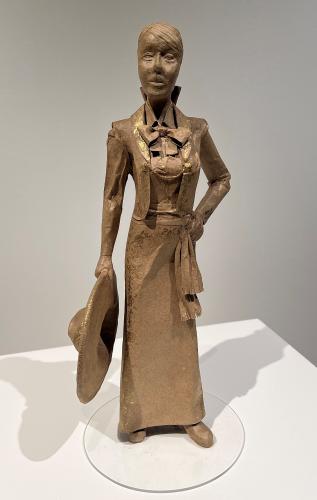
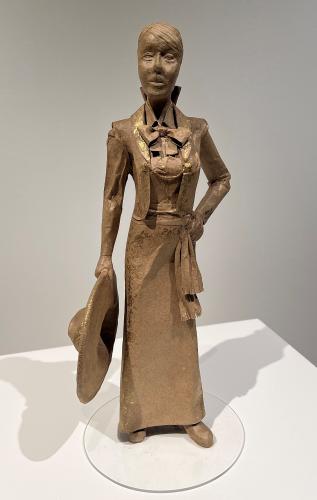
COWGIRL
2001
Inkjet on paper (Collection of M.N. Hutchinson)
Mary Shannon Will
TAJ MAHAL
2005
Acrylic, glass on wood

"Alberta and the Group of Seven" at Government House

Sticky at top of newsfeed
No
Article teaser

Did you know there was a strong connection between Alberta and members of the Group of Seven?

Body

Group of Seven.

Three words that thrill Canadian art lovers everywhere. And while much of the work produced by the Group of Seven focused on eastern Canada, did you know there was a strong connection between Alberta and members of the Group of Seven?
 

This connection is explored in an exhibition now on view at Government House in Edmonton. Aptly titled Alberta and the Group of Seven, it was developed by independent curator and writer Mary-Beth Laviolette in partnership with Gail Lint, Art Collections Consultant with the Arts Branch.  

If this exhibition sounds familiar, a version of it, curated by Laviolette, travelled around Alberta from 2016 through 2018. The AFA Art Collection team installed the exhibition in Government House, made up of work from the Government House art collection, the collection of the Government of Alberta and the Alberta Foundation for the Arts art collection as part of our exhibition loan program. Click the arrows above to see a short slideshow of images of select artworks in the exhibition. 

Click on an artist’s name to see their work in the AFA art collection.*

Artwork ready to be installed at Government House. Far right: Illingworth Kerr, "Forest Reserve, Spring". 1973. Oil on canvas. Collection of the Alberta Foundation for the Arts. 

I had an opportunity to ask Mary-Beth Laviolette a few questions about this exhibition and the connection between Alberta and the Group of Seven.

AFA: What is the connection between Alberta and the Group of Seven?

MB: A number of early Alberta artists like H.G. Glyde and Catharine and Peter Whyte sketched and painted alongside members of the Group such as A.Y. Jackson and J.E.H. MacDonald. Jackson, for instance, did not drive, so artists like Glyde and members of the Lethbridge Sketch Club drove him to different sites to sketch or paint outdoors. Banff’s Peter and Catharine Whyte knew MacDonald and Lawren Harris from their outdoor excursions in the Rockies.

AFA Art Collections staff, Gail Lint and Jackie Flaata, install an artwork in Government House

AFA: Why do you think these artworks still have so much resonance today?

MB: First of all, they are memorable works of art. I mean, Euphemia McNaught’s oil of Monkman Creek simply glows, while Jackson’s small 1935 oil titled Foothills, Alberta captures so much of the distinctive character of the coulees. There are a lot of striking artworks from this period that are not only landscapes but also depictions of small-town Alberta and especially their grain elevators. Most of those [the grain elevators] are now gone and were not admired as artistic subjects at the time. Annora Brown of Fort Macleod was even advised in her own town there was nothing worthwhile to paint, and she should go to Europe where they had windmills, such as France! I guess there was a feeling that art happened somewhere else.

AFA Art Collections staff, Neil Lazaruk (left) and Duncan Johnson (right) install on Government House H.G. Glyde’s "Stream Under Grotto Mountain, Near Canmore". 1948. Oil on board. Collection of the Alberta Foundation for the Arts.

AFA: What do you want people to take away from this exhibition?

MB: There is such a thing called ‘Alberta art’, and it has a very fine legacy that connects into Canadian art. That may sound like an obvious thing to say, but it needs to be said.

AFA: How do these artworks fit into the story of Alberta art?

MB: They all do. For example,  A.Y. Jackson’s 1943 painting of the newly constructed and remarkable Peace River Bridge was done at a time when the Alaska Highway was being built for reasons connected to the Second World War. H.G. Glyde, then of Calgary, accompanied him as an artist on this trip north.

Installed in Government House, Left: Euphemia McNaught’s "Monkman Creek". 1985. Oil on board. Collection of the Alberta Foundation for the Arts;  Right: A.Y. Jackson’s "Peace River Bridge". 1943. Oil on panel. Collection of Government House.

AFA: Do you have a favourite artwork or artist in the exhibition?

MB: I have a lot of admiration for all of the early artists no matter where they were based, like Euphemia McNaught and Annora Brown. It’s good to know that next year Brown will be one of the artists featured in a national touring exhibition being organized by the McMichael Collection of Art in Kleinburg, Ontario in connection with the Group of Seven’s centenary. Everyone will be asking who is Annora Brown and where is Fort Macleod?

Interested in seeing these artworks and more in Government House? Free, guided tours take place on Sundays and holiday Mondays.
Mary-Beth Laviolette is an independent art writer and curator based in Canmore, Alberta. She specializes in Albertan and western Canadian art.

*Note: Two artworks mentioned in this article are not part of the AFA art collection. A.Y. Jackson's Peace River Bridge and Foothills, Alberta are in the art collection of Government House.

Written by: Kimberly Van Nieuvenhuyse, Writer/Social Media Officer

Facebook title
"Alberta and the Group of Seven" at Government House
Facebook description

Did you know there was a strong connection between Alberta and members of the Group of Seven?

Twitter title
"Alberta and the Group of Seven" at Government Hou
Twitter description

Did you know there was a strong connection between Alberta and members of the Group of Seven?

Button text
AFA Virtual Museum
Art discipline
Collections Database Image
Collections Images Slideshow
Annora Brown
UNTITLED (FORT MACLEOD)
c. 1940
oil on board
Arthur Lismer
HIGH GLACIER
c. 1926
oil on hard board
A.Y. Jackson
NORTHLAND TAPESTRY
1950
oil on board
Euphemia McNaught
MONKMAN CREEK
1985
oil on canvas board

Now On View | Two New Emerging Curator Exhibitions

Sticky at top of newsfeed
No
Article teaser

"Absence Inhabited" and "Dear Alan", featuring artworks from the AFA's collection, are now on view on Google Arts and Culture.

Body

Absence Inhabited is curated by Ashley Slemming, and Dear Alan is curated by Natasha Chaykowski and Yasmin Nurming-Por. Both exhibitions have been generously funded though the Alberta Foundation for the Arts Emerging Curator Fellowship.  
 

Absence Inhabited

This exhibition represents 29 artworks by 27 Alberta artists. These artists all highlight unique perspectives on object-hood and have contributed to a rich survey of domestically-situated artworks. These works ring into focus notions of intimate home spaces within a continually growing and interconnected relational world. 

Curator's Statement (excerpt)

The works featured in this exhibition all tell different stories. The represented objects all appear to hold a patina or residue of life, yet all the objects presented are inanimate lifeless forms. Absence Inhabited consequently serves as an examination of absence representing presence and the inherent states of being that are reflected in these various artworks. The range of objects represented allows for consideration of the concept of home and being from a variety of viewpoints - and challenges us to think about how we live, communicate and function on a day-to-day basis. 

Ashley Slemming, curator, Absence Inhabited

About the Curator: Ashley Slemming

Ashley Slemming is a Canadian embroidery and print artist based in Calgary, AB. Her work invites curiosity into our sentimental connection with repetition, pattern, and colour in both nature and textiles.  In her conceptual art practice she often explores the parallels between human and animal behaviours that are revealed by our relationships to our living environments, both man-made and natural.

In addition to the AFA's Emerging Curator Fellowship, Ashley has explored curatorial avenues as a Curatorial Intern with the Illingworth Kerr Gallery. She has completed her BFA with distinction in Printmaking from the Alberta College of Art and Design.

Dear Alan

This exhibition represents 32 artworks by 31 Alberta artists. 

Curators' Statement (excerpt)

Dear Alan brings together a dizzying number of landscapes from the AFA permanent collection, displayed in a digital gallery, salon style. Rather than present works within a cohesive curatorial theme, based on typical modes of exhibition-making that rely on continuities such as concept, form, or historical period, this exhibition seeks instead to show varied, and at times disparate, artistic approaches to landscape representation, across time and medium—a curatorial methodology that speaks to an impulse to approach art through a productive un-knowing, a state of wonder, that eschews the reliance upon expertise in a given area of research. Like the permanent collection itself, which in all institutions shifts and morphs with changing leadership, access to funds, and artistic vision, Dear Alan chronicles the ebbs and flows of the AFA’s ever-changing collecting ethos and the evolving artistic and political sensibilities in Alberta more broadly.

Natasha Chaykowski and Yasmin Nurming-Por, curators, Dear Alan

About the Curators: Natasha Chaykowski and Yasmin Nurming-Por

Natasha Chaykowski

Natasha Chaykowski is a writer and curator based in Calgary. Currently, she is Director of Untitled Art Society. She has organized numerous exhibitions, discursive programs and arts-based events. Chaykowski held a curatorial assistant position at Art Gallery of Ontario, co-curated the annual Emerging Artist Exhibition at InterAccess in Toronto with Nancy Webb and is the co-recipient of the 2014 Middlebrook Prize for Young Canadian Curators. She was Editorial Assistant for the Journal of Curatorial Studies and the Editorial Resident at Canadian Art magazine in 2014. Her writing has been published in Carbon Paper, the Art Gallery of York University, esse: arts + opinions, Canadian Art, Gallery 44, and the Journal of Curatorial Studies.

Yasmin Nurming-Por

Yasmin Nurming-Por is a curator, writer and educator currently based in Toronto, Ontario. In 2017, she was the recipient of the 5th Middlebrook Prize for Young Canadian Curators, and an Alberta Foundation. In addition to the Emerging Curator Followship exhibition, Dear Alan (co-curated with Natasha Chaykowski), 2018, other recent and upcoming projects include In shadows of the individual (2017); My curiosities are not your curios (2017); TV Dinner (2017); ARCTICNOISE (2015); At Sea(2015); and Blind White (2015). In 2015-2016 she was a sessional faculty member at Humber College in Toronto. In 2017 the position of Assistant Curator at the Walter Phillips Gallery at Banff Centre for Arts and Creativity, and currently holds the position of Research Assistant at the Art Gallery of Ontario.

Both exhibitions are available to view on Google Arts and Culture

About the Emerging Curator Fellowship

This fellowship is designed to support the growth and development of curatorial talent by contracting an individual or ensemble of individuals to develop content for an online exhibition of Albertan visual art. 

This initiative is intended to bring a new perspective to the artworks and artists featured in the AFA collection.

Jim Picco's Plastic Bag is part of the exhibition Absence Inhabited

Alan's Untitled is part of the exhibition Dear Alan.

Facebook title
Now On View | Two New Emerging Curator Exhibitions
Twitter title
Now On View | Two New Emerging Curator Exhibitions
Art discipline
Collections Database Image
Collections Images Slideshow
Jim Picco
PLASTIC BAG
1996
OIL
Alan
UNTITLED
N.D
PENCIL CRAYON

Work of the Week: AFA film screenings

Sticky at top of newsfeed
No
Article teaser

We all need a bit of art film in our lives. Check out short films from our art collection that are travelling in southeast Alberta (June 27 – Aug 31)

Body

This summer, we are excited that three short films from our art collection will be showcased as part of our AFA travelling exhibitiong (TREX) program in Southeast Alberta - Medicine Hat.

Plan your visit:
 

View it for free in-person: TREX Southeast art gallery: 2, 516 3rd Street SE, Medicine Hat, Alberta

But wait, it gets better ... the films will be projected on the outside of the building for the month of August where it's visible from the sidewalk. Note the gallery will be closed for internal operations the month of August so this provides an alternative for the public to access art on the exterior of the building.

Media Arts:

The Little Deputy

Trevor Anderson, The Little Deputy, 2015, video, 0:8:51 minutes, Collection of the Alberta Foundation for the Arts

  • Trevor tries to have a photo taken with his father.
  • World Premiere: Sundance Film Festival
  • Trevor Anderson is a writer, director, actor and former video store clerk whose short films were presented at a variety of international festivals. 

Dark Horse

Yvonne Mullock, Dark Horse, 2016, video, 16:28 minutes, Collection of the Alberta Foundation for the Arts

  • Dark Horse uses symbols synonymous with cowboy culture; the Stetson hat and horse, as tropes to explore Calgary’s long and entwined history of ranching and the city’s historic annual Stampede event. Using print, video and sculpture Dark Horse explores an innovative horse-centric printmaking method and invites viewers to delve into cowboy identity and Western mythologies that hover over the history and collective memory of folklore traditions in Calgary.
  • Yvonne Mullock received an AFA International Studio & Curatorial Program (ISCP) Residency in New York Funding in 2017. Her artwork was selected in numerous exhibitions in Alberta and world-wide. 

Wake Up!

​Jessie Ray Short, Wake Up!, 2015, experimental film, 5:57 minutes, Collection of the Alberta Foundation for the Arts

  • Wake Up! highlights the legacy of eighteenth-century Métis political leader Louis Riel and raises questions about colonialism.
  • Jessie Ray Short is a filmmaker, multidisciplinary artist and independent curator. Her work touches on Métis history and visual culture.

Click the arrow icons ( < or > ) above to scroll through images.

Image descriptions:

  • image one: a black and white image of an older man is sitting and is wearing a cowboy hat, and vested suit. Beside him is a young boy wearing a cowboy hat, vest, jeans and his side pocket holds a gun in a gun belt.

     
  • image two: A brown hair person is hidden behind a brown horse. A blonde woman wearing a white artist apron and long sleeved black shirt, where she is holding a mono-print of a cowboy hat in front of the horse

     
  • image three: A young man with curly brown medium length hair and moustache. He is wearing a white shirt and brown vested suit.
Facebook title
Work of the Week: AFA film screenings
Facebook description

We all need a bit of art film in our lives. Check out films from our art collection that are travelling in southeast Alberta (June 27 – Aug 31)

Twitter title
Work of the Week: AFA film screenings
Twitter description

We all need a bit of art film in our lives. Check out films from our art collection that are travelling in southeast Alberta (June 27 – Aug 31)

Button text
AFA Virtual Museum
Deadline
Art discipline
Collections Database Image
Collections Images Slideshow
Trevor Anderson
The Little Deputy
2015
video
Yvonne Mullock
Dark Horse
2016
video
Jessie Ray Short
Wake Up!
2015
experimental film

Work of the Week: "Blue Picture Stand" by Sidney Kelsie

Sticky at top of newsfeed
No
Article teaser

Check out the "Sidney Kelsie: Right in your own backyard" exhibition at AGA in-person to see the artwork that we have loaned out until August 1, 2022.

Body

This week’s Work of the Week is Blue Picture Stand by Sidney Kelsie.
 

About the Artist: Sidney Kelsie (1928 - 2000)

A Black man of Caribbean heritage, Sidney Kelsie was born in Windsor, Nova Scotia in 1928.

He joined the Canadian Navy at the age of 16, before going to work at logging camps. After suffering serious injury to his legs in a logging accident, he went to work as a house painter. He had to give that up in 1979 due to his old injuries, and at the age of 53 and retired, he started fashioning cut-out wood shapes which he painted in colourful hues and hung in the yard of his Edmonton home. Passersby began taking an interest in the hanging artworks and would occasionally ask to buy individual pieces. Kelsie would often comply and in this way could supplement the meagre income that he shared with his wife Louise. Gradually, his art began to attract attention from serious collectors as well as art dealers.

Completely self-taught, Kelsie would accurately be described as a “folk artist.” His art was a product of his own imagination, although critics have pointed out connections to other “yard art” creators. Mostly African-American, it is speculated these individuals may have been carrying on a traditional West African practice of hanging charms in trees around the home in order to protect the home-owner and provide healing and spiritual affirmation. Kelsie didn't have much to say about such theories, however, and, in fact, was reluctant to even call himself an artist. Nonetheless, what he made was appreciated by long-time art collectors and by ordinary people with no knowledge of art.

Kelsie's art did receive its share of official art world recognition, including in 1996, when some of his pieces were included in a major show of folk art at the McMichael Collection of Canadian Art in Kleinburg, Ontario, curated by Calgary art critic Nancy Tousley.

Exhibition:

Check out the "Sidney Kelsie: Right in your own backyard" exhibition at AGA in-person to see the artwork that we have loaned out until August 1, 2022. Free admission to AGA in Edmonton is the last Thursday (4-7pm) of every month. Get your free ticket to a community tour of Kelsie's exhibition with David Staples July 28, 2022 event.

Or listen to the audio documentary to learn more about the artist, what art meant to Kelsie, and how his legacy lives on.

Explore the AFA's Virtual Museum to see other works of Alberta artists.

Facebook title
Work of the Week: "Blue Picture Stand" by Sidney Kelsie
Facebook description

Check out the "Sidney Kelsie: Right in your own backyard" exhibition at AGA in-person to see the artwork that we have loaned out until August 1, 2022.

Twitter title
Work of the Week: "Blue Picture Stand" by Sidney
Twitter description

Check out the "Sidney Kelsie: Right in your own backyard" exhibition at AGA in-person to see the artwork that we have loaned out until August 1, 2022.

Button text
AFA Virtual Museum
Collections Database Image
Collections Images Slideshow
Sidney Kelsie
BLUE PICTURE STAND (FRONT)
1995
enamel, metal, and wood
Sidney Kelsie
BLUE PICTURE STAND (REVERSE)
1995
enamel, metal, and wood